– High-efficiency, high-power-density MV MOSFET solutions for AI servers, data centers, high-performance computing (HPC) and industrial power systems
– Comprehensive power semiconductor portfolio on display, including LV MOSFETs, MV MOSFETs, SJ MOSFETs, IGBTs, SiC, and Power ICs
– PCIM Europe 2026, Nuremberg, Germany — Hall 6, Booth 337
Seoul, South Korea, May 26, 2026 — Magnachip Semiconductor Corporation (NYSE: MX, “Magnachip”), a designer and manufacturer of power semiconductor solutions, today announced that it will showcase its Medium-Voltage (MV) MOSFET portfolio for AI server and data center power systems at PCIM Europe 2026, which will be held from June 9 to 11, 2026, in Nuremberg, Germany.
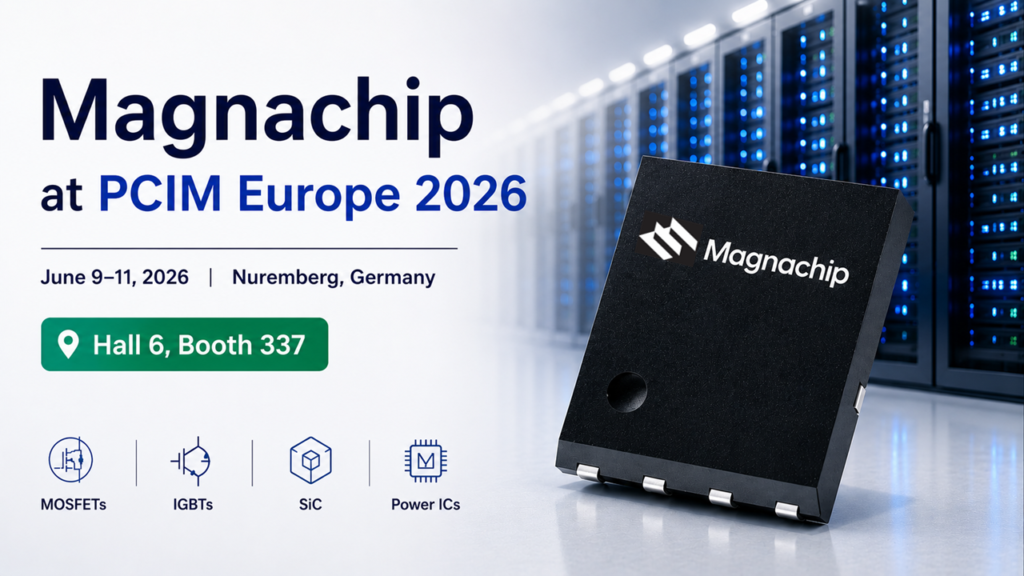
At Hall 6, Booth 337, Magnachip will exhibit its MV MOSFET solutions for server and data center power supply units (PSUs), high-performance computing (HPC), and industrial power systems.
As AI workloads continue to expand and data center power consumption rises, power efficiency, power density, and thermal management have become increasingly important in server and data center power system design. According to market research firm Omdia, the global power discrete semiconductor market for Computing and Data Storage applications is expected to grow from approximately $2.3 billion in 2025 to $3.0 billion in 2029, representing a compound annual growth rate (CAGR) of approximately 7.4%.
At the exhibition, Magnachip will highlight its MV MOSFET portfolio designed to support high-efficiency and high-density power architectures for AI servers and data centers.
MV MOSFET Solutions for AI Servers and Data Centers
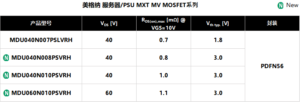
Magnachip’s MV MOSFET product family is designed for a broad range of applications including synchronous rectification stages in server and high-performance computing power supply systems, industrial power systems, and solar inverter applications. Based on advanced Shielded-Gate Trench (SGT) technology, the portfolio is designed to support improved current density and switching performance while addressing the requirements of high-temperature and high-density power designs.
“As power demand in AI servers and data centers continues to increase, customers are seeking semiconductor solutions that can support higher power efficiency and power density. Magnachip plans to continue expanding its MV MOSFET portfolio and strengthening its power semiconductor solutions for AI servers, data center power systems, and industrial applications.”
— Hyuk Woo, Chief Technology Officer, Magnachip Semiconductor
Broader Power Semiconductor Portfolio
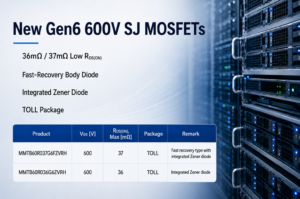
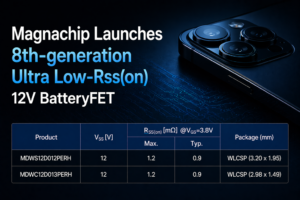
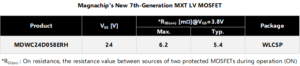
In addition to its MV MOSFET solutions, Magnachip will also showcase its broader power semiconductor portfolio spanning LV MOSFETs, MV MOSFETs, Super Junction MOSFETs, IGBTs, SiC, and Power ICs. These products support a broad range of automotive and industrial applications, including:
∙ EV & Automotive — traction inverters, onboard chargers (OBC), and DC-DC converters
∙ Industrial — solar, ESS, motor control, and industrial automation
PCIM Europe 2026 Exhibition Information
Magnachip will participate in PCIM Europe 2026 (Hall 6, Booth 337) in Nuremberg, Germany, where it will showcase its MV MOSFET portfolio for AI servers and data centers, along with its broader power semiconductor solutions portfolio.
∙ Location: Hall 6, Booth 337 — Nuremberg, Germany
∙ Date: June 9–11, 2026
∙ See Floorplan: PCIM – Magnachip
∙ Meeting Request: kyeongah.cho@magnachip.com
∙ More Information: Magnachip at PCIM Europe 2026
About Magnachip Semiconductor
Magnachip is a designer and manufacturer of analog and mixed-signal power semiconductor platform solutions for various applications, including industrial, automotive, communication, consumer and computing. The Company provides a broad range of standard products to customers worldwide. Magnachip, with about 45 years of operating history, owns a substantial number of registered patents and pending applications, and has extensive engineering, design and manufacturing process expertise. For more information, please visit www.magnachip.com. Information on or accessible through Magnachip’s website is not a part of, and is not incorporated into, this release.
Contacts:
| Mike Bishop
United States (Investor Relations)
Bishop IR, LLC
Tel. +1-415-891-9633
mike@bishopir.com |
Kyeongah Cho
Global Marketing Communication
Magnachip Semiconductor
Tel. +82-2-6903-3179
pr@magnachip.com |
In the Media
 Magnachip to Showcase MV MOSFET Portfolio for AI Servers and Data Centers Alongside Its Broader Power Semiconductor Portfolio at PCIM Europe 2026